
Digital courses and info products are one of the most powerful engines for building a business that gives you genuine freedom. They sell directly, without sales calls, at any hour of the day, from anywhere in the world.
But that potential only materializes when the marketing system behind them is built correctly from the ground up.
In this article I will walk you through how to build a complete marketing system for consistent, profitable sales of digital courses and info products.
What Makes This Knowledge Different
The knowledge in this article is not theoretical. It comes from hands-on management of campaigns for digital courses and info products across a wide range of industries, campaigns that have generated seven figures and beyond.
I work with copywriting and marketing methodologies I learned from the biggest names in the field, names who personally reviewed my own sales pages and pushed them to the point of extreme optimization and exceptional conversion rates. And that is exactly the standard our pages consistently deliver.
Every campaign begins with in depth conversations with the business’s existing customers. These conversations surface the psychological and emotional world of the people we are trying to reach, and reveal the exact words they use to describe their pain, desires and dreams.
At the same time, I conduct deep conversations with the business owner and often watch the course itself, in order to identify the unique mechanism that sets it apart from every competitor.
From the precise match between the customer’s world and the product’s unique value, the copy, designs, sales pages and campaigns are born. Once live, everything is continuously optimized based on what the data and the market reveal. And when profitability stabilizes, we scale budgets and the results compound.
This is the approach behind everything you are about to read.
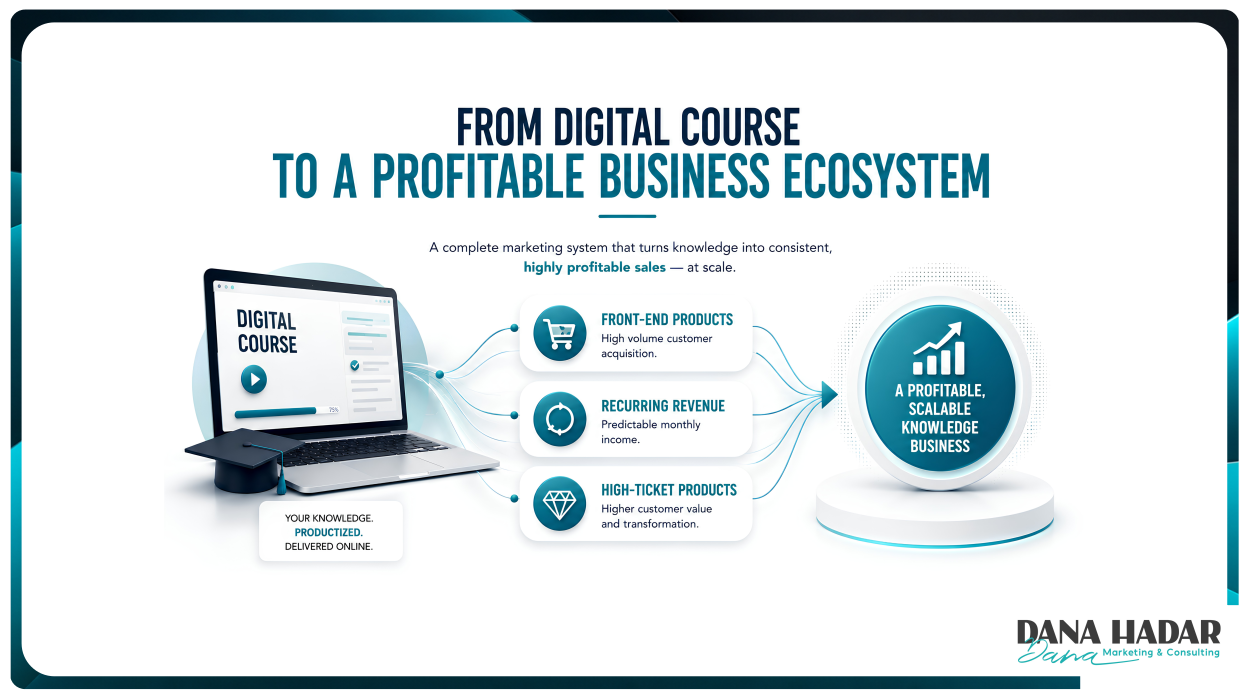
The Business Model: Front End Products + Recurring Revenue + High Ticket Products
Building a knowledge based business that generates real, stable income starts with one foundational understanding: you are always operating on two levels at once. The volume level and the quality level.
The volume level is about selling accessible products at accessible price points to the widest possible audience. The quality level is about deepening the relationship with customers who have already come in and guiding them toward larger, higher value purchases over time.
The model is built on three layers that work together.
Front end products are the entry point into your world. They sell directly without sales calls, bringing new customers into the business at high volume and low acquisition cost.
Recurring revenue comes from a digital membership, subscription or app that generates a fixed monthly payment from existing customers, giving the business stability and predictable cash flow.
High ticket products are higher priced coaching programs and personal support products designed for the segment of customers who want close, personalized guidance and are willing to invest accordingly.
When all three layers work together, they create an ecosystem where every customer who enters can grow with you over time.
And every dollar spent acquiring a new customer generates far more value than a single purchase ever could.
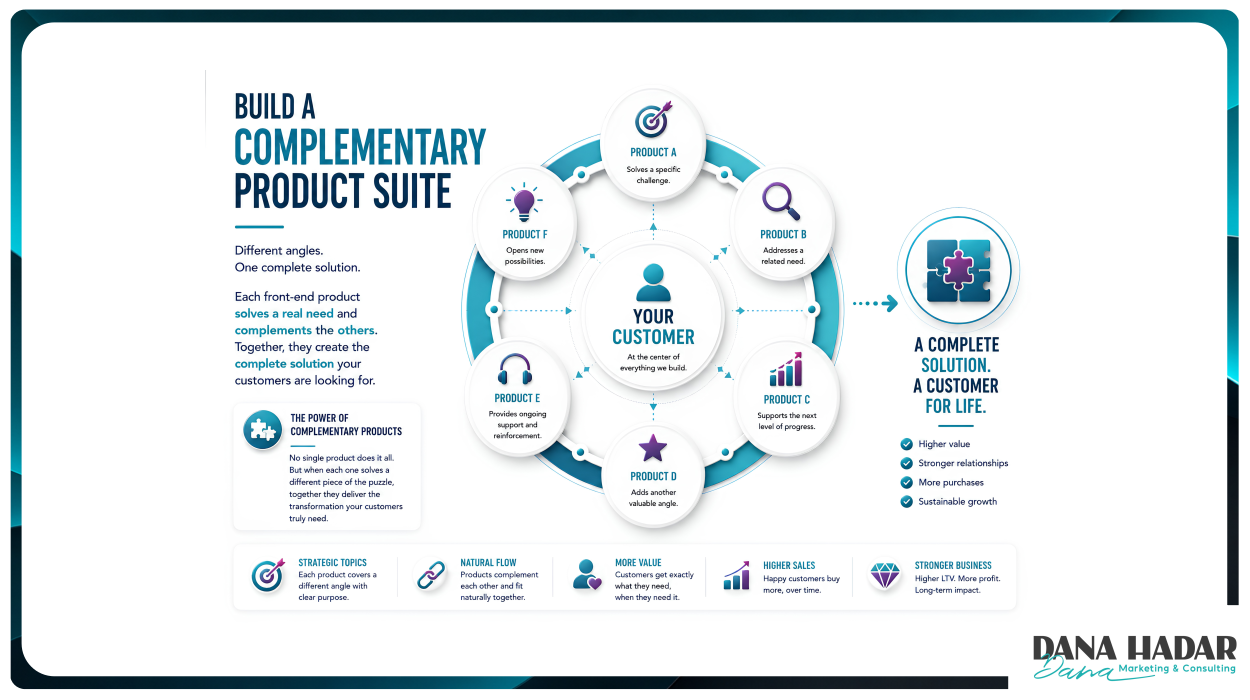
How to Choose the Right Front End Product and Build a Complementary Product Suite
A front end product is the entry point into your world. It is not meant to be your most comprehensive offer. It is meant to be your easiest one to buy.
For a front end product to work, it needs to meet three basic criteria.
First, the price needs to be accessible enough to allow an impulse purchase without a sales call, typically under one hundred dollars.
Second, it needs to solve one focused problem in a meaningful way, so the customer feels they received real value from their very first purchase.
Third, it needs to naturally open the door to the next product, not by leaving the customer feeling something is missing, but by making them want more.
This is where the most powerful idea in this model comes in: building a complementary product suite.
Instead of putting all your knowledge into one product, you choose different content angles. Each one stands alone as a complete, valuable unit. Together they build the full system for your customer. Every product delivers real value on its own, and together they create a journey the customer genuinely wants to complete.
The logic behind choosing these angles is always the same: pick topics that complement each other intuitively, so that after finishing one product the customer naturally understands why they need the next one.
The Marketing System Behind a Profitable Info Product
Before diving into the details, it is important to understand the big picture.
The marketing system for a profitable info product follows the customer journey like this:
Paid ads drive the user to a long form sales page, which leads to a direct purchase. Those who do not buy the first time enter a retargeting sequence and an email list that warms them up over time until they are ready to buy. Those who do purchase enter an email marketing sequence that leads them toward additional purchases and complementary products. And once the system proves its profitability, you scale.
Every step in this chain depends on the step before it. A weak offer will never be saved by great advertising. It will only expose its weakness faster. A poor sales page will not be rescued by a large budget. And ads that are misaligned with the page will cause immediate drop off and wasted spend.
This is why the right approach is always to build the chain from the ground up before spending a dollar on ads, and to make sure every part is perfectly aligned with the next.
In practice this means the messaging, visuals, tone and promise in your ads must match exactly what the customer finds when they land on the sales page. Any gap between the ad and the page creates a sense of disconnect, and the customer leaves. In the industry this is called a high bounce rate, and it is one of the fastest ways to destroy campaign profitability.
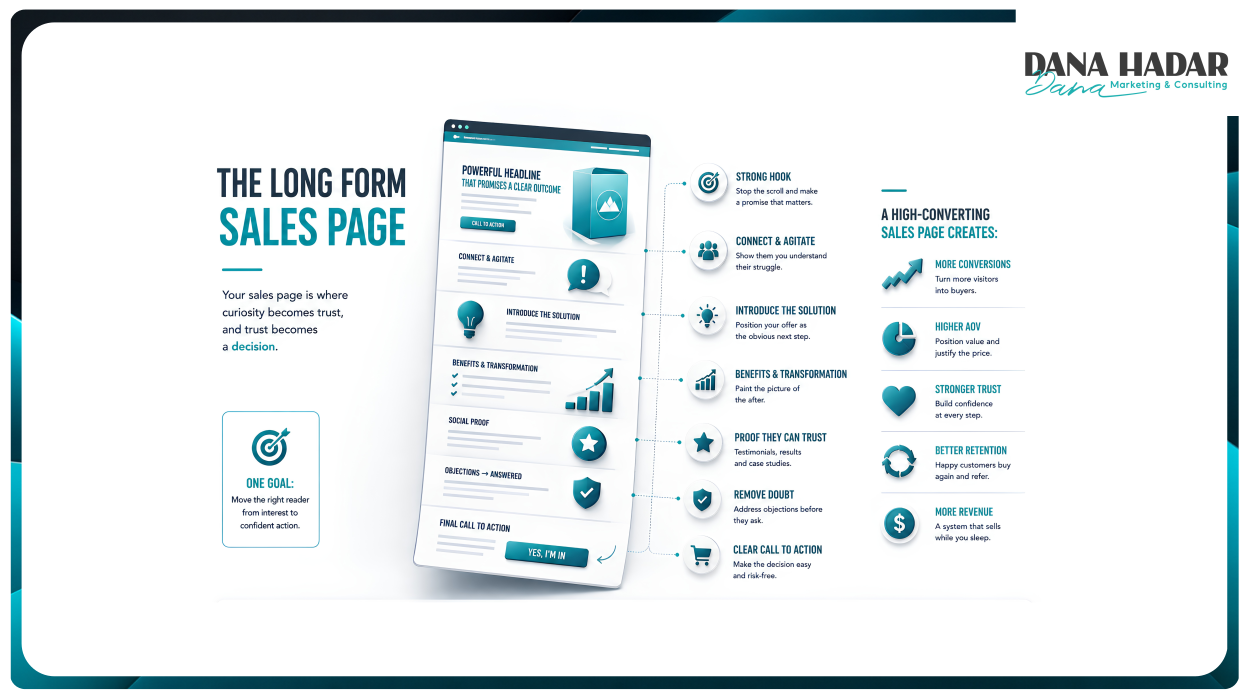
An Irresistible Offer Inside a Long Form Sales Page
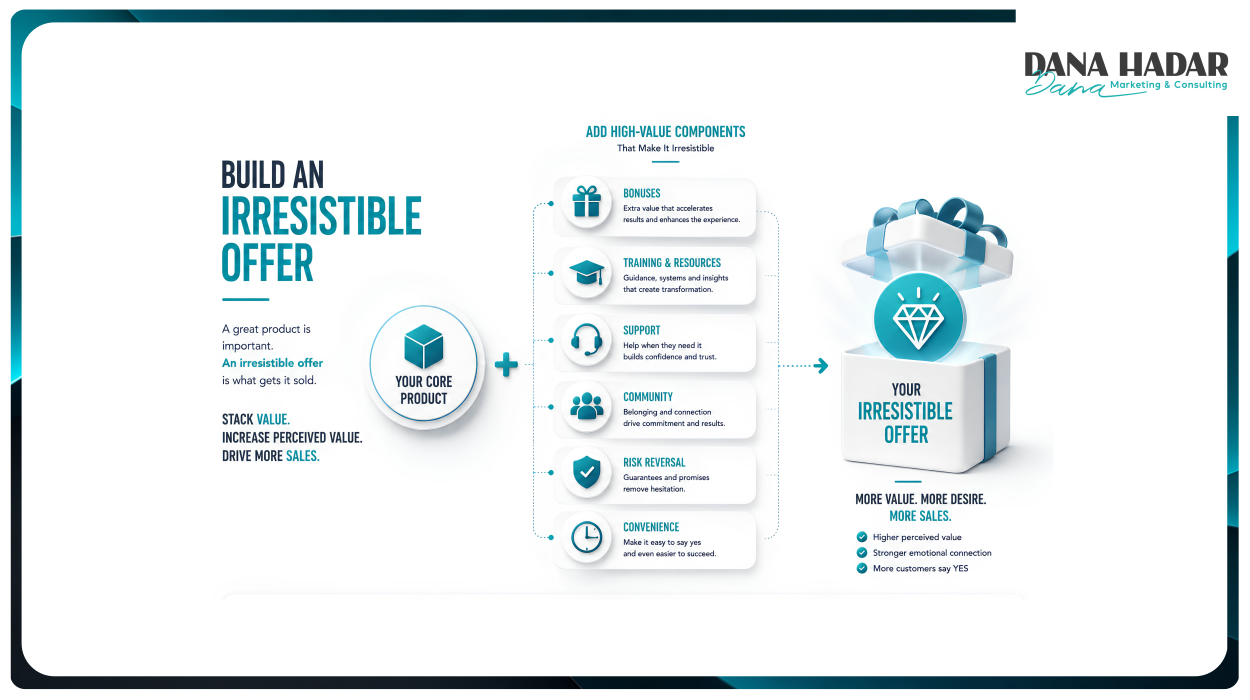
A strong offer is the foundation of every successful marketing campaign. Before building a sales page, before running a single ad, you need to make sure the offer itself is a genuine no brainer for the customer.
An irresistible offer is built from several elements working together: a product that truly delivers real value, a price that feels like a steal relative to what the customer receives, a strong and clear promise so the customer knows exactly what they are getting and how their life will change, and complementary bonuses that increase perceived value without triggering the question “why isn’t this already included in the main product.”
On top of that offer, you build the long form sales page.
A long form sales page is not just another landing page. It is a complete psychological structure built on direct response copywriting principles that have been tested across hundreds of millions of dollars in advertising worldwide.
Its purpose is to guide the potential customer step by step, from the moment they land on the page to the moment they pull out their credit card and complete the purchase, without a sales representative ever needing to be involved.
A long form sales page that works correctly includes the following elements:
A bold headline that stops the reader from the very first line. A deep dive into the customer’s pain points using the exact words they think, feel and say. The solution and how it works, including every benefit it delivers. The story of the methodology and the unique expertise behind it. Customer testimonials. A course syllabus written to trigger curiosity rather than simply list content. Strong bonuses. A guarantee. And more testimonials, as many as possible.
It is important to understand that this page is also the foundation of the entire campaign. The messages it contains become the basis for the ads, the newsletter and every other piece of marketing content. This is why it is always built first.
Paid Advertising That Brings the Right Audience
Once the sales page is built and ready, it is time to run paid ads.
A common mistake I see is the assumption that Facebook and Instagram are the only platforms capable of bringing quality audiences to digital course purchases. In our experience that is simply not true. Google’s platforms consistently produce some of the strongest results, and in far more creative ways than most people imagine when they hear the words “Google campaign.” I will dedicate a separate article to this topic that will open up the full scope of what is possible there.
The right platforms for each business are determined by where that business’s audience actually spends its time. Once the platforms are defined, you build the ad system.
Effective paid ads test multiple content angles and messages simultaneously. Each angle speaks to the customer from a different point of entry: pain, promise, benefit, an existing customer testimonial, or a demonstration of the result waiting for them.
The ads are tested against each other to quickly identify which messages and creatives drive the best results, and what combination between them performs strongest.
As mentioned, the alignment between the ad and the sales page is critical. A customer who sees a specific ad and arrives at the page needs to feel they are in exactly the right place, that the message that drew them in continues and develops on the page. Any sense of disconnect causes immediate drop off. And as we all know, there is no second chance at a first impression.
Brand Building: Retargeting, Newsletter and Staying Top of Mind
Most purchases do not happen on the first exposure to a brand or an ad. An initial warm up period is not a sign that the campaign is failing. It is simply how people make decisions. That said, we often see surprisingly fast results in the early stages of a campaign.
The key is not to build your expectations around those early results or assume they will hold once the initial wave of early adopters has come through. This is why building the brand consistently matters, and doing it smartly within the same channels and budgets already being used for sales.
Most people need multiple touchpoints with a brand before they are ready to buy. This is why one of the most valuable assets in any marketing campaign is the ability to keep showing up with strong content for the people who expressed interest but have not yet purchased.
Retargeting is the first layer. It allows you to reach back out to people who visited the sales page, watched a video, or engaged with your content, with focused messages that match exactly where they are in their decision making process.
The newsletter is the second and deeper layer. A quality email list is one of the most valuable marketing assets a business can build, because it is not dependent on any platform’s algorithm. People who signed up chose to hear from you, and that makes an enormous difference in their level of engagement.
A newsletter that works delivers quality content on a consistent basis, the kind subscribers look forward to and read thoroughly. When the content is strong enough, people save and categorize the emails. Yes, that is the kind of response our clients’ newsletters actually receive. And when a new product or launch goes out, the list is already warm and ready to buy fast.
Organic social media presence completes the picture. It is rarely what drives the big difference in sales, but it creates a quality brand face for the new user encountering the brand for the first time, while reinforcing credibility and keeping the brand present in the minds of an existing audience.
The Numbers Behind Profitability
Running a marketing campaign correctly requires knowing a few key numbers.
Customer acquisition cost is how much it costs on average to bring in a customer who makes their first purchase.
Average order value is how much each purchase generates on average, including upsells and add on products offered to the customer during the purchase process of the main product being advertised.
Customer lifetime value, or LTV, is the total amount an average customer spends with you across their entire purchasing journey.
Overall profitability is the difference between total revenue and the combined costs of advertising, production, operations and the ongoing management retainer.
Truly knowing these numbers is what allows you to make data driven decisions at every stage of the campaign.
This is why our clients receive a structured weekly report every Sunday, with a full breakdown of the previous week’s data. And we maintain open, ongoing communication about everything those numbers are telling us.
Because at the end of the day, after all the creativity, the content, the strategy and everything else, what actually speaks is the numbers.
When and How to Scale
Scaling is not a stage you start early. It is a stage you earn the right to reach.
Before increasing budgets, you need to confirm that the campaign has proven consistent profitability over a sufficient period of time. You are looking for a clear, stable pattern that shows the system is working reliably.
Once profitability is proven, you begin raising budgets gradually, not in large jumps. Every budget increase is accompanied by close monitoring of the numbers to confirm that profitability holds as spend grows.
Not every campaign that works at a small budget continues to perform at the same profitability when you multiply it, which is why this monitoring is critical.
In parallel with raising budgets, you continue testing new content angles and messages. Creative fatigue is real, and the ability to produce fresh content consistently is one of the most decisive factors in maintaining strong results at scale.
Building Recurring Monthly Revenue
One of the elements that transforms a knowledge based business from a business that depends on the next launch into a business with real stability is building a consistent, recurring monthly revenue stream.
The idea is simple. Instead of every customer paying once and moving on, you build a framework that keeps them in your world, paying monthly in exchange for ongoing value they receive on a regular basis.
Practical examples include a digital membership that delivers content, tools and community on a monthly basis, a subscription to ongoing content that deepens and expands what the customer learned through the front end products, and an app that supports the customer in applying the methodology in their daily life.
The advantage of this model goes beyond stable income. It deepens the relationship with the customer over time. A customer who stays with you stays with you for the long run knows the methodology deeply, believes in it, and is far more likely to purchase future high ticket products, buy into every new launch, and refer others to you.
In any market where the potential customer base is limited, recurring revenue is not a nice bonus. It is a strategic component that allows the business to grow steadily without being entirely dependent on acquiring new customers.
High Ticket Products
There will always be a segment of customers who have purchased your front end products, gone through the system, and want more. They believe in the methodology, they have seen results, and they want close personal guidance that maximizes their chances of success.
These are the customers you build high ticket products for.
High ticket products come in a wide range of formats and price points. At one end are group coaching programs that include coaches or facilitators from your team, requiring less of your personal time while still serving a larger audience.
At the other end is direct one on one coaching with you personally, the most expensive and most sought after offer, one that demands a price point that truly justifies the time and personal energy you invest.
To make the best use of your time, energy and expertise, it is important to plan these products in advance as an intentional part of the overall ecosystem, not as an afterthought that gets added later.
Summary: The Complete Ecosystem of a Knowledge Based Business
A knowledge based business that is built correctly is not just another digital course waiting for the next launch. It is a system that sells while you sleep or take a vacation, grows stronger over time, and allows you to focus on what you actually want to do.
The shift happens when you stop thinking about a single course and start thinking about a complete ecosystem: a front end product that brings in new customers, complementary products that build the full methodology for them, recurring revenue that creates stability, and high ticket products that deepen the relationship with those who want more.
When all these layers work together, you get a business that grows steadily without being dependent on your personal time alone.
And that is the real potential of marketing digital courses and info products the right way.