
“We need more leads.”
I hear this from CEOs and business owners all the time.
But almost every time, after just a few deeper questions, it becomes clear: they don’t actually need more leads. They need better ones.
Because what good is a campaign that brings in hundreds of inquiries a week if your sales team can’t get anyone on the phone?
What good is any of it if most of those inquiries never convert into paying customers?
And what does a low cost per lead really mean if your cost to acquire a customer is high enough to kill your margins?
That’s exactly why this article is not about how to get more leads. It’s about how to build a Facebook lead campaign that brings in quality leads, the kind that actually become paying, profitable customers.
Why Lead Campaigns Often Fail
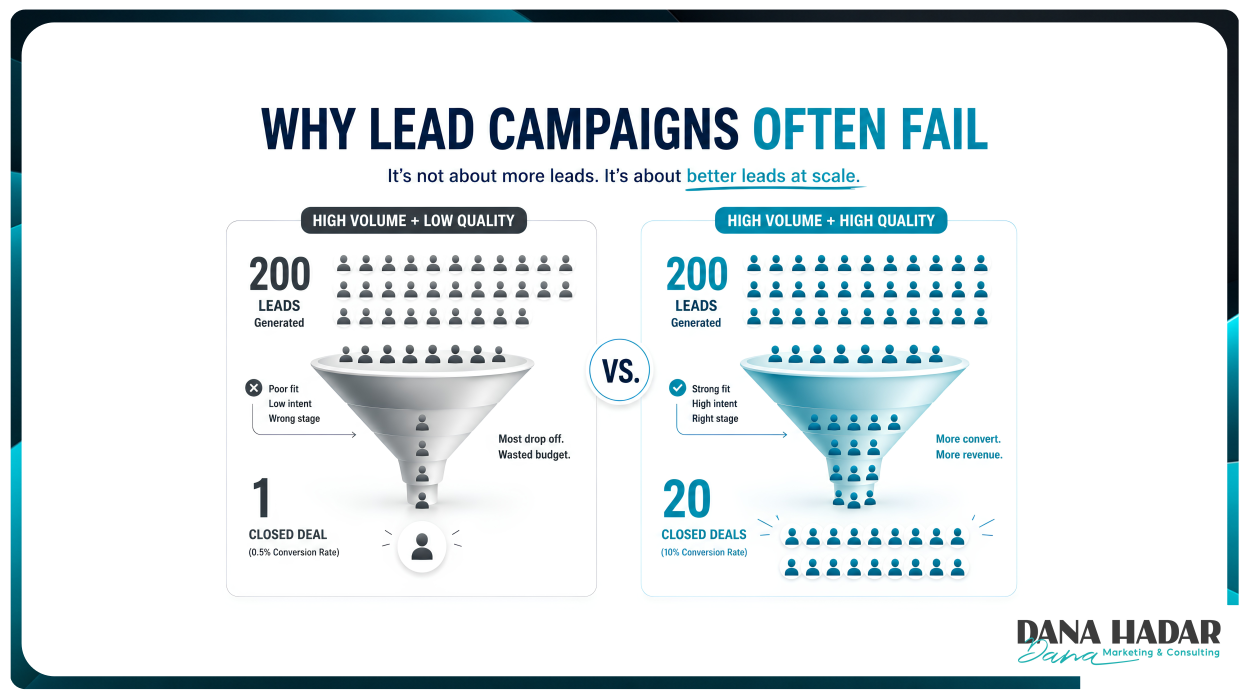
Most campaigns don’t fail because of Facebook. They fail because of the wrong metrics.
Most businesses measure cost per lead, number of leads, and number of form fills.
But a business doesn’t grow from filled forms. It grows from closed deals.
A campaign that brings in 200 leads with only one closed deal is not better than a campaign that brings in 40 leads with 10 closed deals.
A cheap lead is not necessarily a good lead. Sometimes it’s exactly the opposite.
The broader your messaging, the wider the audience you attract, and the more irrelevant inquiries you get.
The real game is not lead volume. It’s lead quality at scale.
What Is a Quality Lead, Really?
A quality lead is not simply someone who filled out a form.
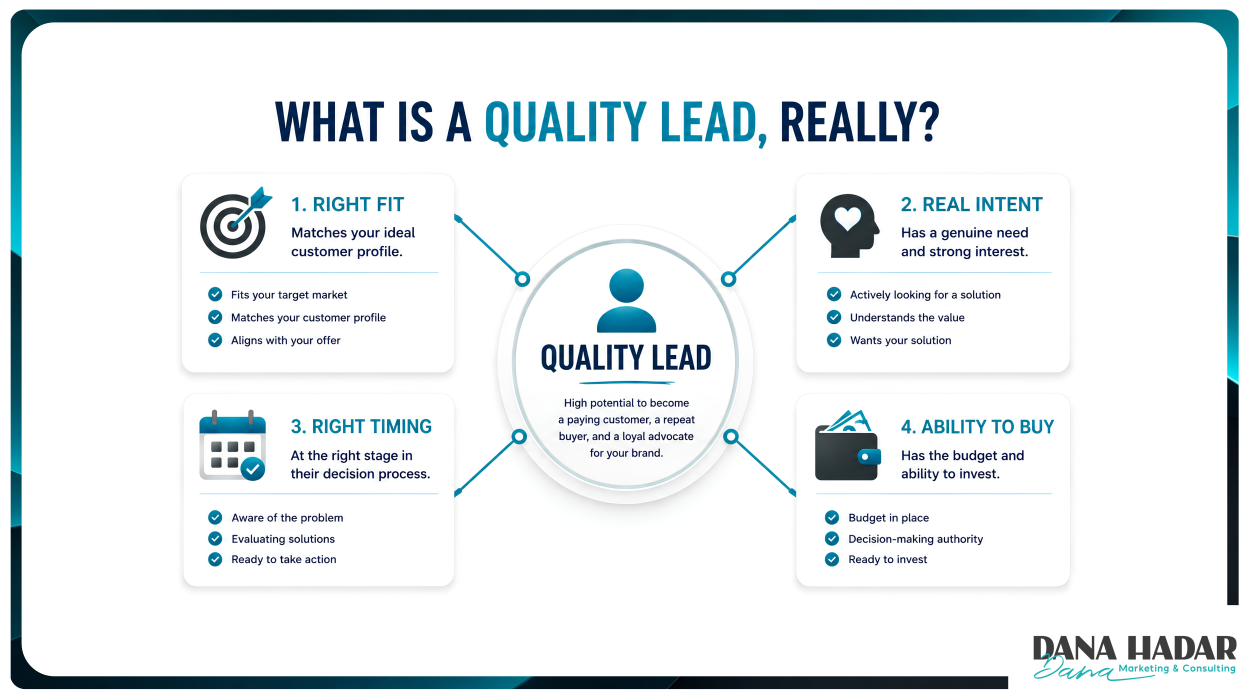
A quality lead is someone with a high likelihood of becoming a paying customer, a repeat buyer, and a loyal advocate for your brand.
Generally speaking, they fit this profile: they have a genuine need for your solution, they have the financial ability to purchase it, they connect emotionally with your brand and messaging and therefore want to buy specifically from you, and they are at the right stage in their decision making process.
When you define clearly what a quality lead looks like for your business, building a campaign aimed precisely at that person becomes significantly easier.
The problem is that most businesses try to build a campaign before they even know who they are looking for.
The Customer Research Behind a Powerful Lead Campaign
This is where the real work begins. Not in Facebook. Not in the ads. Not in the landing page.
It begins with a deep understanding of who your most profitable customers actually are.
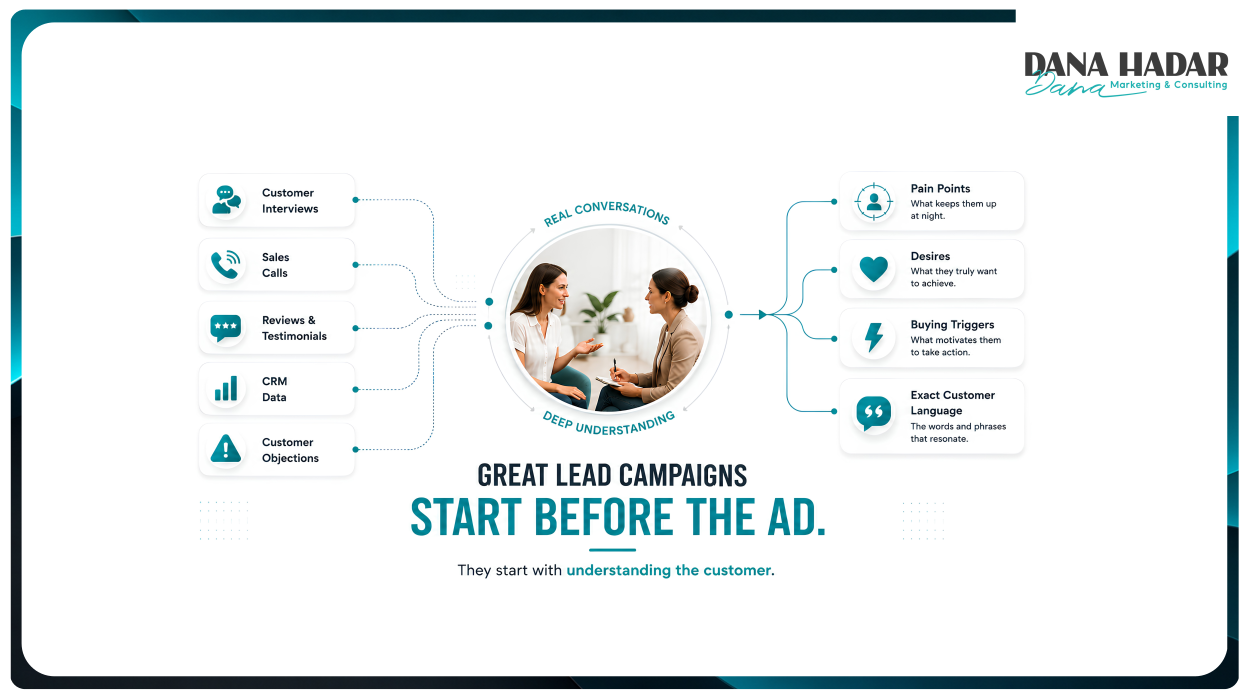
There is no substitute for real conversations with your existing customers. Technology and AI are powerful tools (and at my agency we work with them at the highest professional level) but at the end of the day, your customers are human beings, and we need to understand them at the deepest human level before taking any other step.
One of the most valuable investments you can make is simply talking to your best customers.
When I say talking, I mean asking them things like: why they chose you, what they were searching for before they found you, what they were afraid of, and what almost stopped them from buying.
These conversations build a real emotional picture of your customers and how they think. And the answers shape everything that comes after: your messaging, your creative, your landing page, and your campaign structure.
We are only scratching the surface here to illustrate the principle. A dedicated guide on customer research and in depth interviews is coming soon to the blog.
The Message and Creative That Bring in Quality Leads
Once you understand your customers, it’s time to build your message. And this is the stage where many businesses get it wrong.
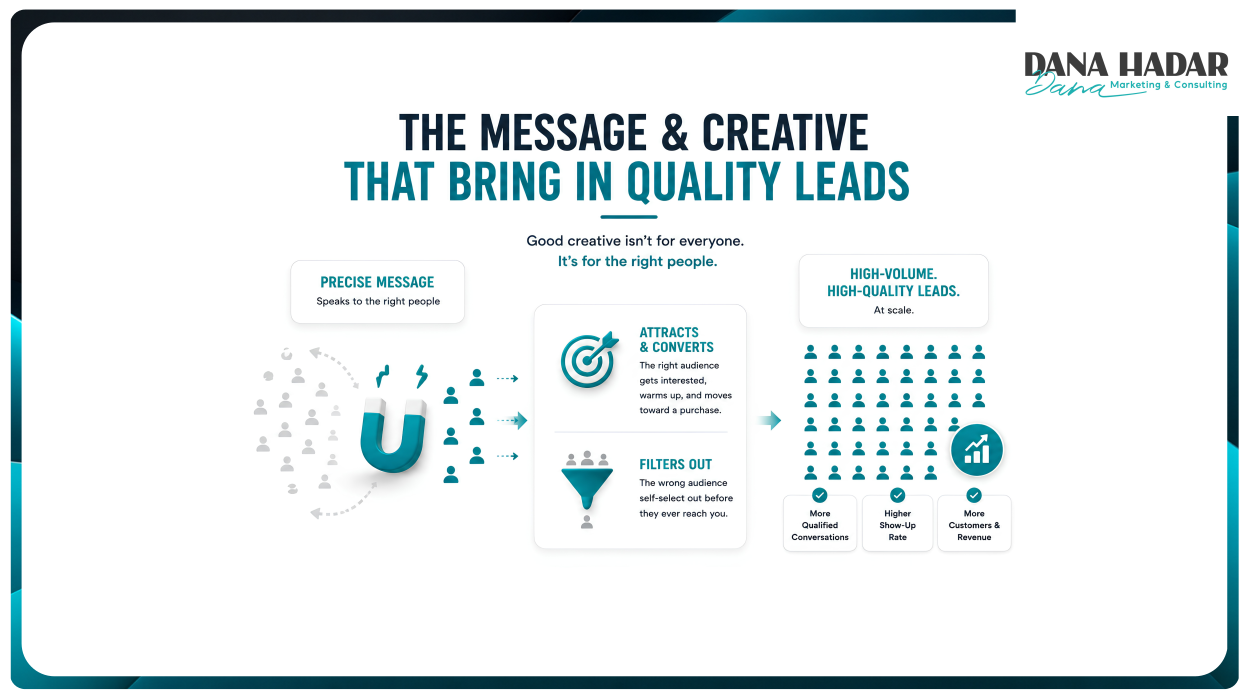
They try to appeal to as many people as possible. But good creative is not supposed to attract everyone. It’s supposed to attract the right people.
A precise message does two things.
First, it attracts the right audience, gets them interested, warms them up, and moves them toward a purchase.
Second, it filters out the wrong audience before they ever reach you.
This is why a high quality campaign will often generate fewer leads than a broad, aggressive one. But the leads that do come in will be significantly better.
Landing Page or Lead Form?
This is one of the most common questions in the world of paid advertising.
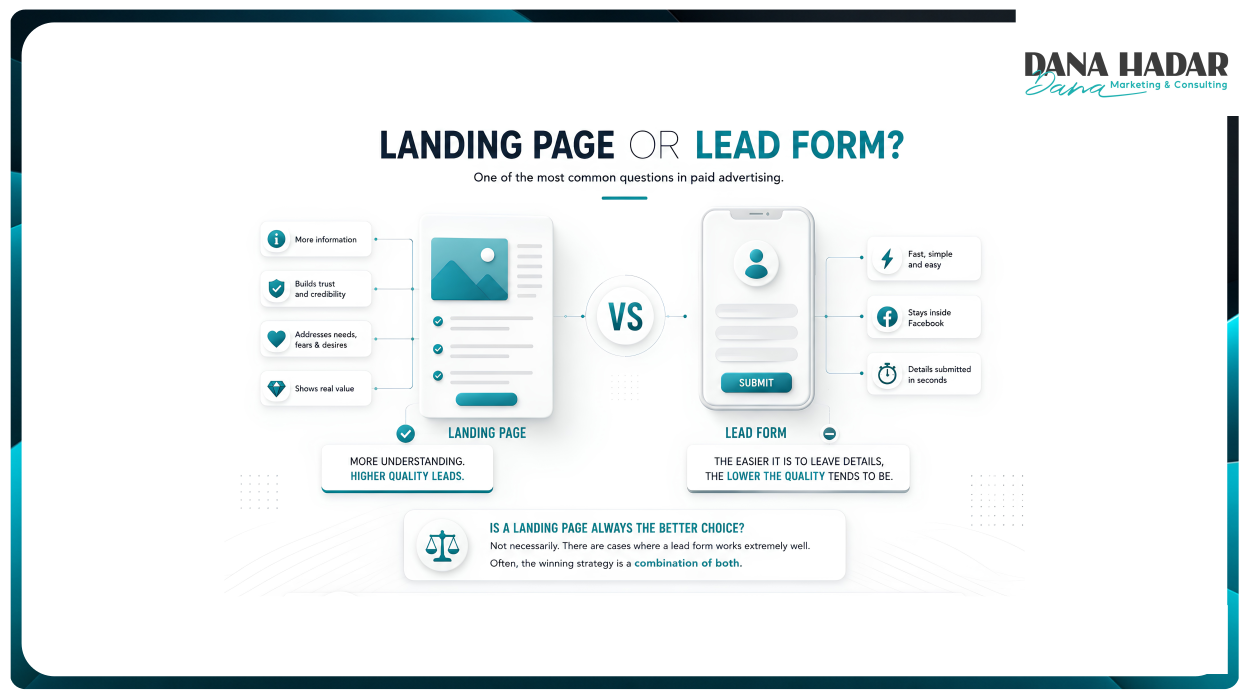
On one hand, a Facebook lead form is fast, simple, and easy to fill out. The user stays inside Facebook and submits their details within seconds.
On the other hand, that very simplicity comes at a cost. The easier it is to leave details, the lower the quality tends to be.
When a user arrives at a well built landing page, they are exposed to more information. They understand what is being offered, who is offering it and what makes them the right expert, why this is the ultimate answer to their needs as well as their fears and deeper desires, and what real value they will actually receive.
Is a landing page always the better choice?
Not necessarily.
There are cases where a lead form works extremely well. And often the winning strategy is a combination of both.
But as a general rule, my default question is not “how do we get as many leads as possible?” It is “how do we get better leads, and as many of those as our budget allows?”
How to Teach Facebook to Recognize Quality Leads Using CRM Data and Offline Conversions Reports
In my view, this is one of the most important topics in this entire article.
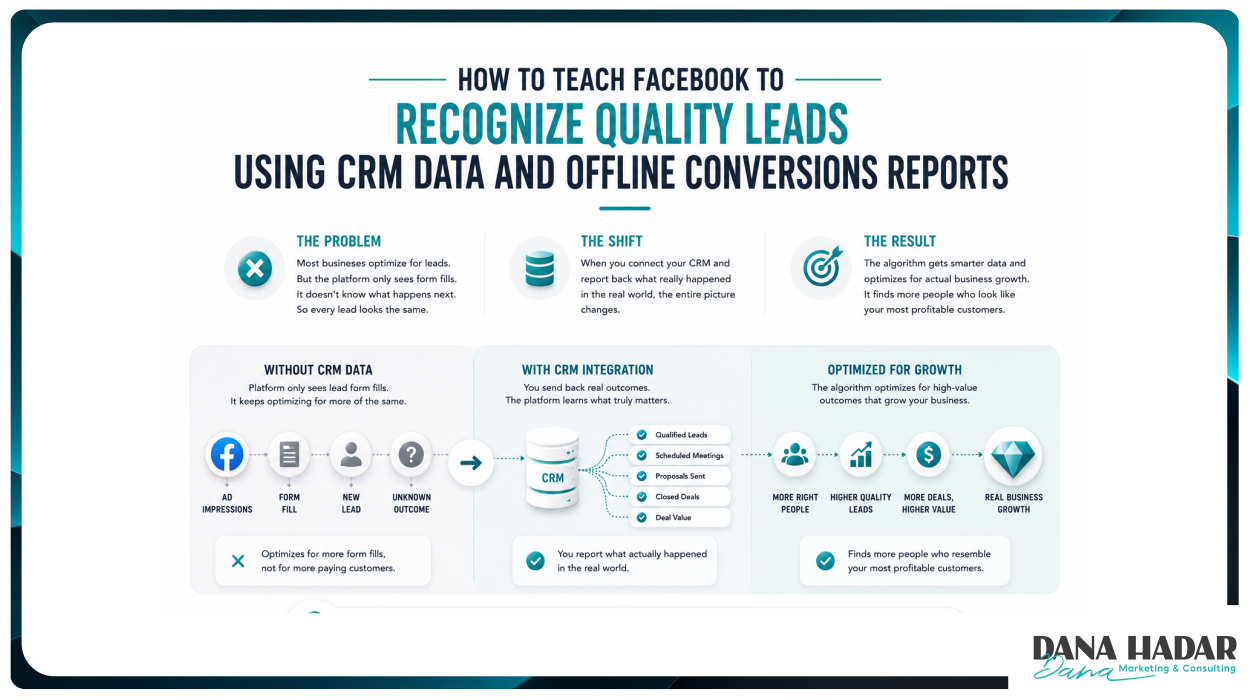
Most businesses optimize for leads. Meaning they teach the algorithm to optimize based on whoever filled out a form and became a lead. But this means Facebook and every other advertising platform have no idea what happened after that lead came in.
They don’t know who answered the phone when your sales team called, who scheduled a meeting, who received a proposal, or who actually closed a deal and at what value.
So as far as the platform is concerned, every lead looks identical. And that is a problem.
Because if Facebook only receives data about form fills, it will keep learning and optimizing toward bringing you more people who fill out forms. Not more people who become actual paying customers.
This is where CRM integration changes everything. When you connect your CRM to your advertising platform and report back what actually happened in the real world, the entire picture shifts.
You can start reporting qualified leads, scheduled meetings, proposals sent, closed deals and their value.
Suddenly the algorithm receives far smarter data and begins optimizing for actual business growth. It is no longer looking for people who fill out forms. It is looking for people who resemble your most profitable customers.
This is one of the places where technology can completely transform the quality of your campaign.
Summary
A good lead campaign is not measured by how many inquiries came in. It is measured by how many deals closed and turned into high value, paying customers.
Getting there requires doing the work correctly at every stage of the marketing chain, starting with a deep understanding of your customer, through your message and creative, your landing page, your campaign structure, and the CRM integration that teaches the algorithm to bring you customers, not just filled out forms.
Businesses that focus on lead quality rather than lead volume build a marketing system that generates real, lasting growth.