
Facebook campaigns can generate hundreds to thousands of warm leads a week — while building a powerful brand and maintaining the kind of consistent output that drives reliable results. In this article, we’ll walk you through the most precise system for making that happen, combining AI tools with advanced strategic thinking
Business owners and marketers entering the world of AI often make a critical mistake. They try to use it to replace strategic thinking. They ask the chat to write an ad, create an image, build a campaign, and then feel let down when the result looks generic.
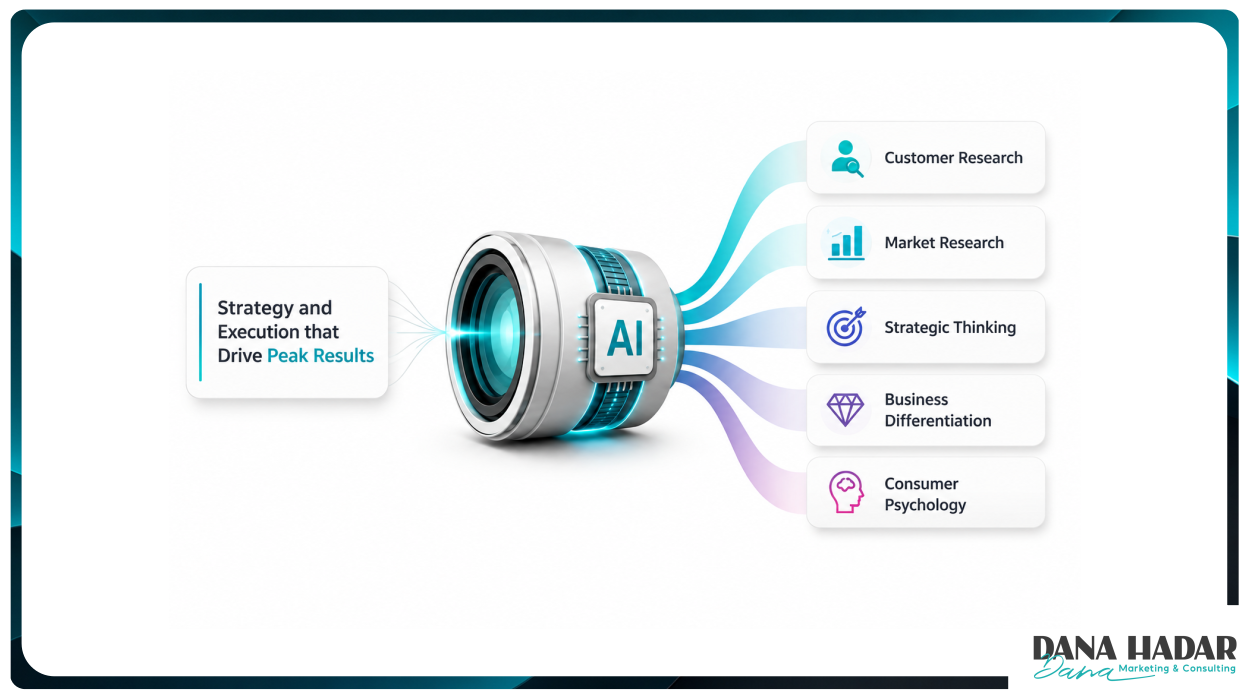
The reason is simple: AI doesn’t replace good marketing. It amplifies it. The deeper your thinking, the better the outputs you’ll get from AI tools. In this article, I’ll show you how I integrate AI into every stage of building a Facebook campaign, from customer research all the way to creating ads, visuals, and videos.
Follow this step by step, and you’ll be able to build Facebook campaigns that bring in far more leads and sales, build a stronger brand, all within the same budget, and with a real impact on your bottom line.
Before We Begin: What Really Makes a Facebook Campaign Succeed?
Many business owners are convinced that success lies in precise audience targeting. The truth is, the days of hyper-precise Facebook targeting are long gone. Today, the algorithm does most of that work on its own, leaving campaign managers very little to do in that department.
So how does the algorithm segment your audience and bring you the most relevant people with the highest likelihood of buying? By scanning your content. Meta’s algorithm has become remarkably intelligent at reading texts, graphic designs, videos, and landing pages, ranking their quality, and figuring out exactly who the business is speaking to and what the offer is.
The better the algorithm understands your content, and the more it values its quality, the stronger and faster your campaign results will be. Which means that today, the best investment any brand can make is in content quality. That is the one guaranteed path to success in paid advertising, organic reach, and every other aspect of your marketing.
A successful Facebook campaign is made up of a chain of elements that work together, each with a distinct role in the process:
The role of the static design or video in the ad: to stop the right person mid-scroll, and only that person. It’s a dual role: to segment the audience correctly, and to make them stop. To interrupt their endless scrolling, cut through every distraction and attention-grabbing element surrounding them from all directions, and get them to pause specifically on your content and move on to read the text.
The role of the text: to pull them deeper into your content, to make them feel this is speaking directly to them and that they have to hear more. And ultimately, to get them to click and arrive at your landing page.
The role of the landing page: to convert interest into action, whether that means leaving their details or completing a direct purchase.
When every link in the chain does its job correctly, and when there is a natural flow and alignment between all the parts, results improve dramatically. In the sections below, we’ll explain how to strengthen each stage of the process using AI.
Step 1: Deep Customer Research Using AI
If there’s one thing that hasn’t changed in the AI era, it’s the need to understand people. There is no substitute for real conversations with your customers, no substitute for genuine listening, and no substitute for truly understanding what’s going on in the minds of the people you want to attract to your business.
That’s why I always start with serious, deep research. Conversations and interviews with real clients, in-depth surveys, correspondence, reviews, any information that can teach us who is really on the other side.
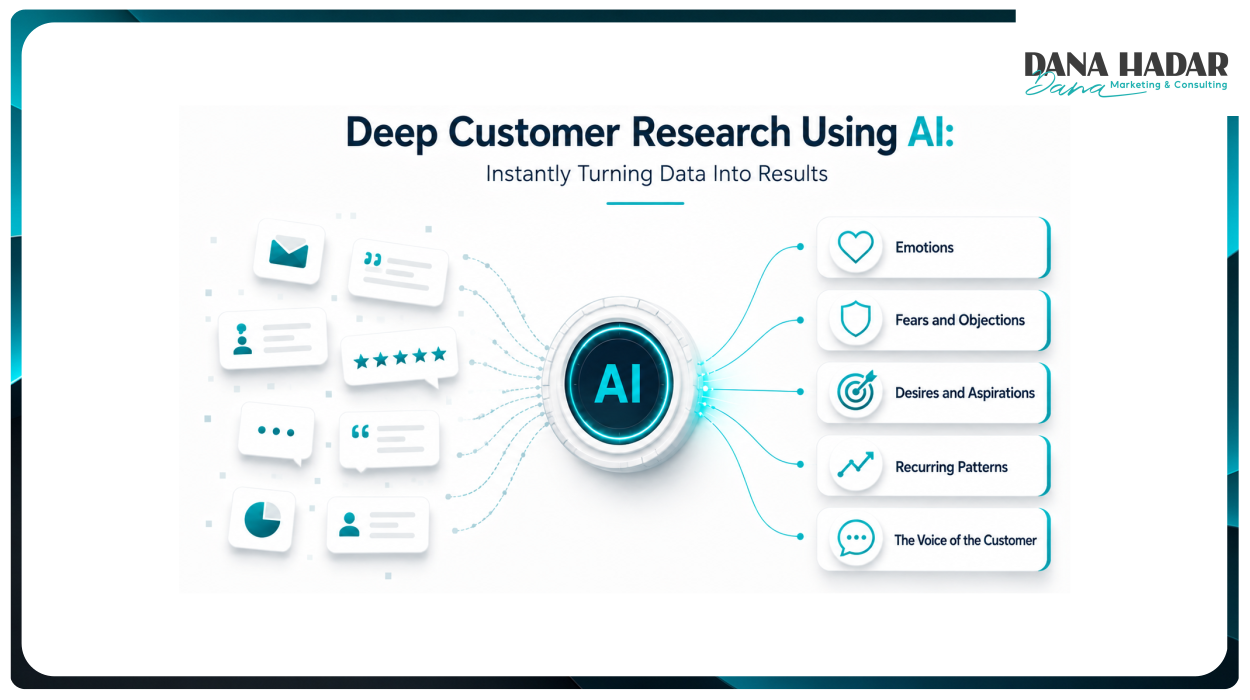
This is where AI’s enormous advantage comes in. Once you’ve gathered the data, upload it to the chat and ask it to:
- Identify recurring emotional expressions
- Identify fears and objections
- Find repeating patterns
- Uncover unspoken desires, aspirations, fears, and frustrations hiding beneath the words
- Pinpoint the specific language your clients use to describe all of it
Suddenly, instead of dozens of scattered pages of information, a clear picture emerges. AI doesn’t replace the real human process, but it does allow you to extract far more value, far more quickly, from the data you’ve collected. For anyone who wants to go deeper into the customer research process itself, including in-depth interviews and smart surveys, I’ve dedicated a separate guide to that.
Step 2: The Rule of One
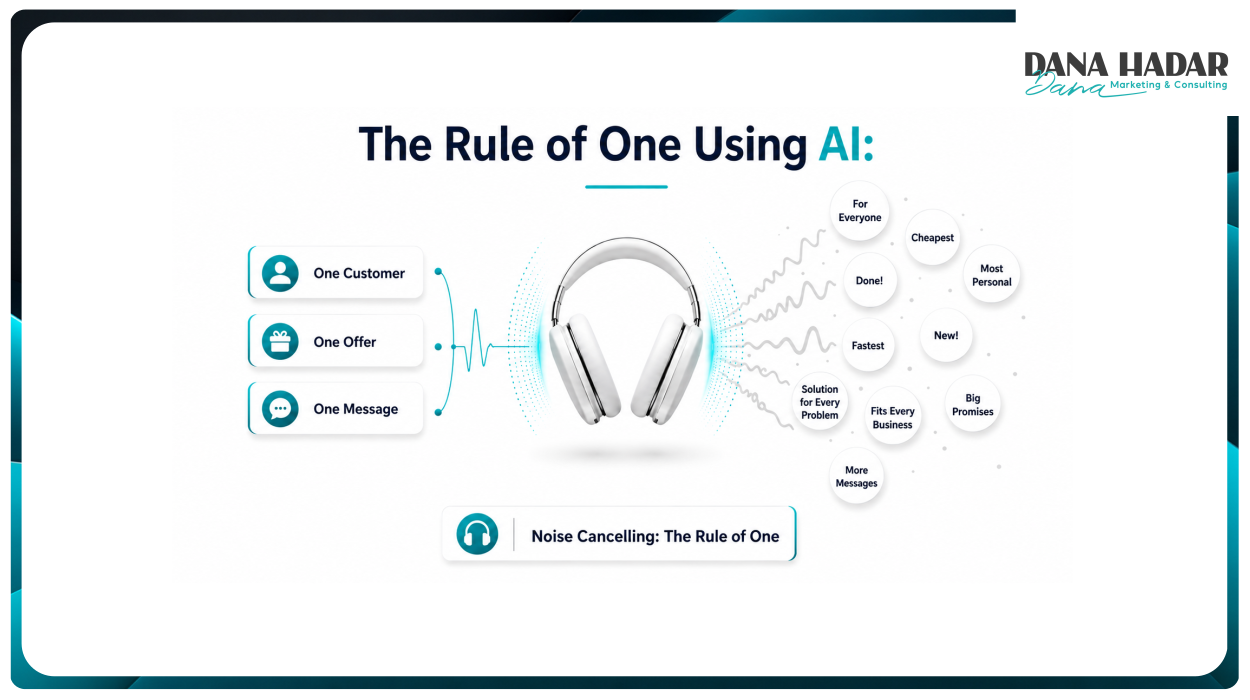
One of the most important principles in good marketing is also one of the simplest. It’s called “The Rule of One”: One customer. One offer. One core message.
So many campaigns I see try to speak to everyone about everything. The result is almost always a weak message that doesn’t really speak to anyone.
So once you’ve finished your research, ask AI to help you define:
- Who is the most precise target audience for this offer?
- What is the single most important promise to lead with?
- What is the one message most likely to influence the decision?
The answers won’t be perfect, but they will almost always help you sharpen your thinking. A strong landing page that reflects all of these decisions is without a doubt the foundation of every successful campaign across all platforms. We won’t go into the full science of building a landing page here, but we’ll assume you’ve built one and that your paid advertising is being built on top of it. For anyone who wants to go deeper into the Rule of One and its impact on conversions, there’s a separate article on the site.
Step 3: How to Train the Chat Before You Start Working
This is the critical step that will have far-reaching effects on the quality of everything you produce, and what surprises me is that most people skip it entirely and don’t even know it exists.
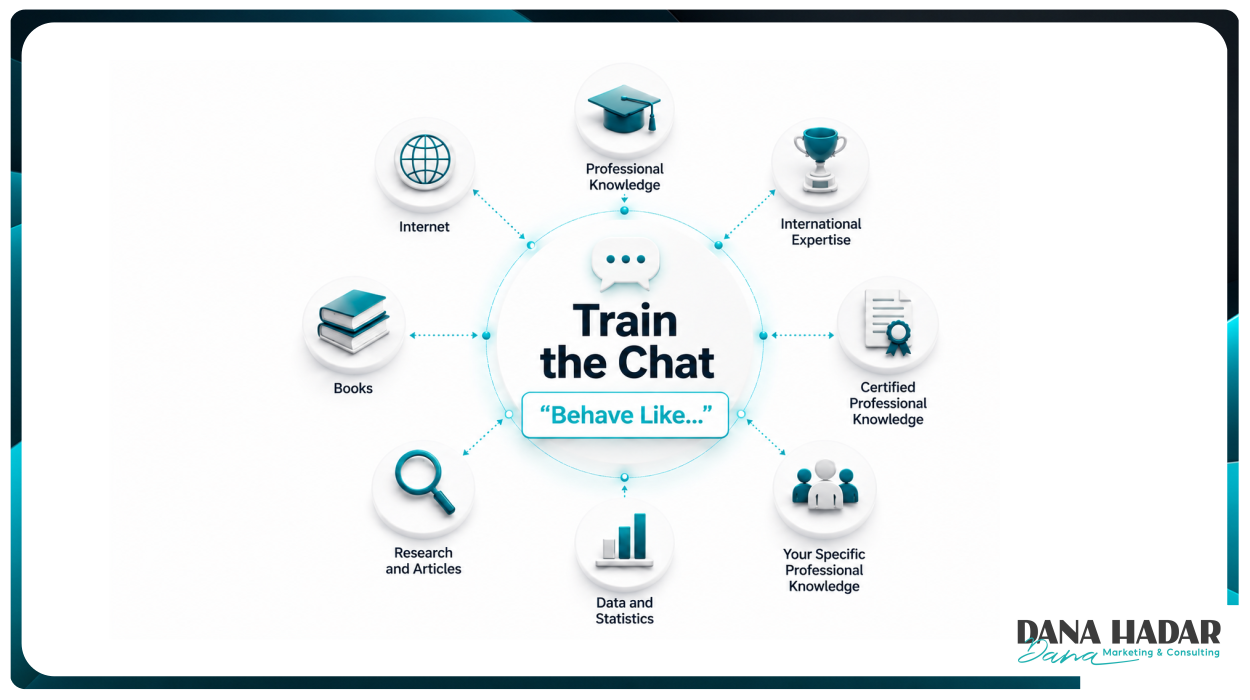
Before I ask any chat, any chat at all, to create something for me, I invest time in training it, teaching it, and clearly explaining who I want it to be for the task ahead.
I send it on a deep research session across the web and instruct it to learn only from the highest-level professional sources internationally, and to become a true expert. I also upload all the materials I have, resources I’ve gathered from the strongest sources, PDFs I’ve painstakingly put together myself, that teach it my entire marketing approach to content creation. Among other things, I want to model and teach it to think like me as much as possible.
After that, I provide it with:
- Information about the business
- Information about the product
- Information about the target audience
- Professional reference materials
- Examples and references I’ve loved
The better the chat understands the business, the better the quality of its outputs. Keep in mind that the volume of work and materials in each chat session is usually limited, so you’ll need to split the work across different chats. It’s recommended to activate the memory and linking feature between chats so that it gets to know you better over time and understands you more deeply from one conversation to the next.
This same process can of course be built using skills and agents, but even those who prefer to keep working in chat mode will gain enormously and perform significantly better with this approach. Use whatever method of working feels right for you.
Step 4: Creating Content Angles for the Campaign
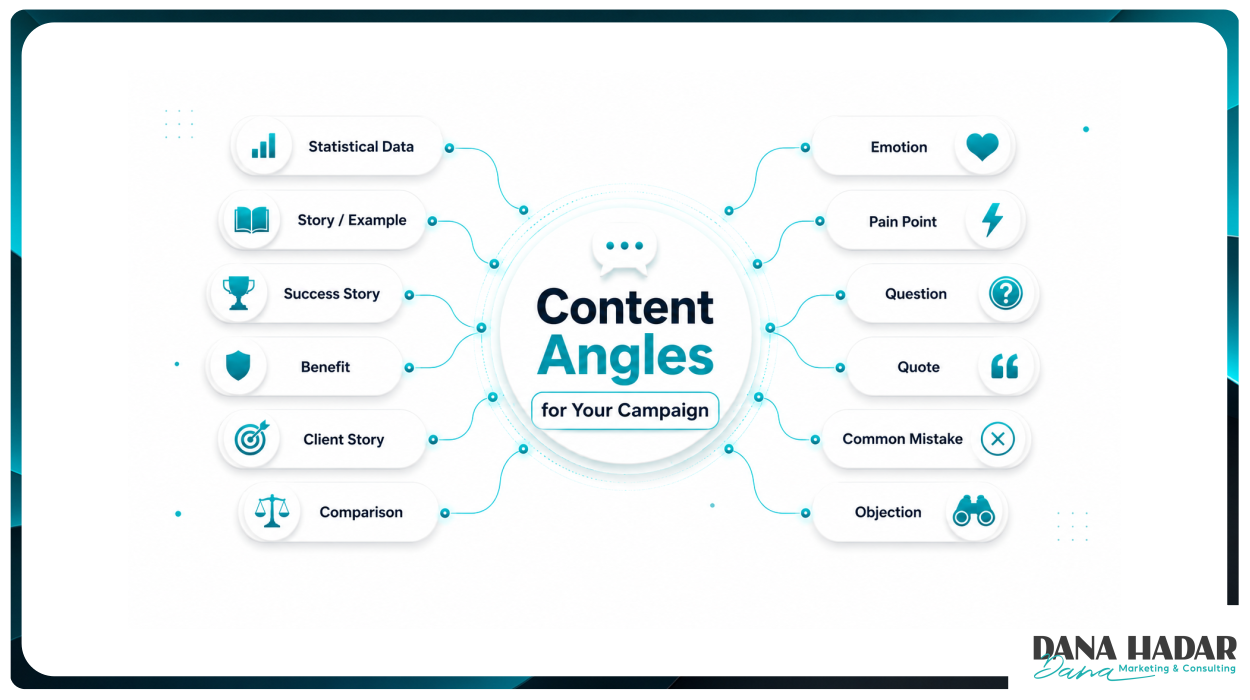
Over the years I’ve gone through many different thinking and working processes for creating content angles, and today the most powerful method in my view is working on static creatives using the ChatGPT Pro model, which has become a brilliant creative generator.
So once you’ve built your landing page based on the entire system I described above, upload the final page to the chat and ask it to study and analyze it from every angle. It already knows all the principles since you worked through the entire thinking process with it, but it’s important to train it again in light of the final result you ended up with.
Now ask it to create static creatives for your paid ads. I’ll say this upfront: the first results will be far from perfect, but the biggest thing that will happen is that through its various attempts, strong creative sparks will almost certainly emerge based on the messages already living inside the page.
This is where a professional human eye is essential. To separate the gold from the noise, choose the strongest angles that surfaced, and continue developing those. On the design side as well, ChatGPT today works phenomenally, but you absolutely need a professional design eye, approach, and knowledge to take the initial base it created and move forward with it. I’ll expand on that in just a moment.
Step 5: Writing the Ad Copy
Only after I’ve chosen the strongest content angles do I move on to writing the ads themselves. I usually ask for several different versions of each angle.
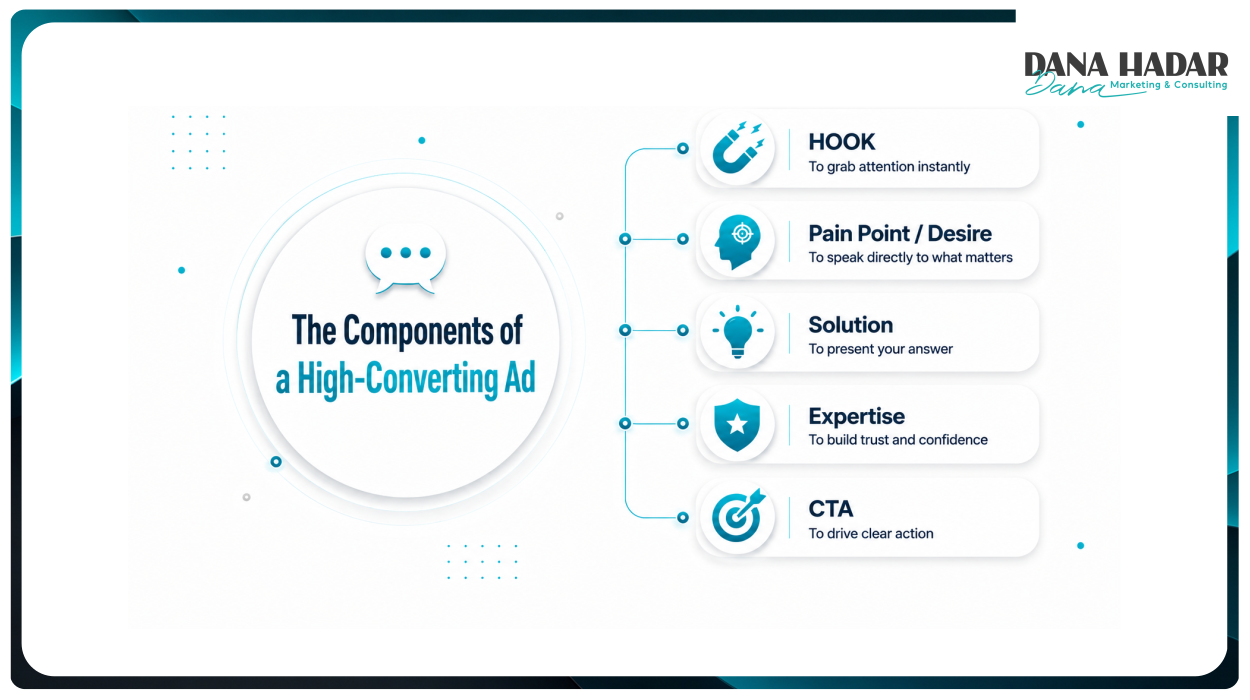
A strong ad text will include:
- HOOK: A concise, powerful opening line (4 to 6 words) that stops the right person, with the right context and emotion
- A connection to a pain point or desire, based on the angles chosen
- Presentation of the solution, and in the case of a personal brand such as expertise-based businesses, digital course creators, info product sellers and so on, also an introduction of the business owner and their unique expertise
- A call to action to click and arrive at the landing page. The call to action should always be written in the imperative form. Research shows again and again that this significantly increases conversion rates.
But I want to emphasize something important: I never publish text exactly as AI wrote it. The first draft is just a starting point. The human fingerprint, the deep familiarity with the clients, and the ability to identify nuances are still an inseparable part of truly great marketing copy. So anyone looking for an automatic magic formula will be disappointed. Anyone looking for a powerful thinking partner will find exactly what they’re looking for, and then some. For anyone who wants to go deeper into the world of copywriting and marketing writing, I’ve dedicated a separate guide to that.
Step 6: Creating Graphic Designs for Your Paid Ad Campaign
In recent years, the creative production process has gone through a real revolution. Today you can generate in minutes what used to require serious budgets.
As mentioned, despite the wild opening buzz around Nano Banana and other tools, ChatGPT today runs circles around all of them with a phenomenal understanding of graphic design that simply doesn’t exist in any other model. But it’s critical to understand that here too, the chat only assists. It does not replace a professional graphic designer or a quality marketing manager who understands design.
Some common mistakes that are typical of the chat and worth watching out for:
- Excessive visual clutter
- Too many elements
- Narrow margins that reduce design quality
- Colors that are off-brand or inconsistent with the brand identity
- Distortions in the logo and existing brand elements of the business
So the good news is that AI is capable of producing brilliant designs today. The additional news is that it’s still critical to go in and refine them with a professional eye and touch, in order to turn them into creatives that truly brand and convert, and not into clip-art level designs that do more harm than good.
Step 7: Creating High-Converting Videos for Your Campaign, Using AI
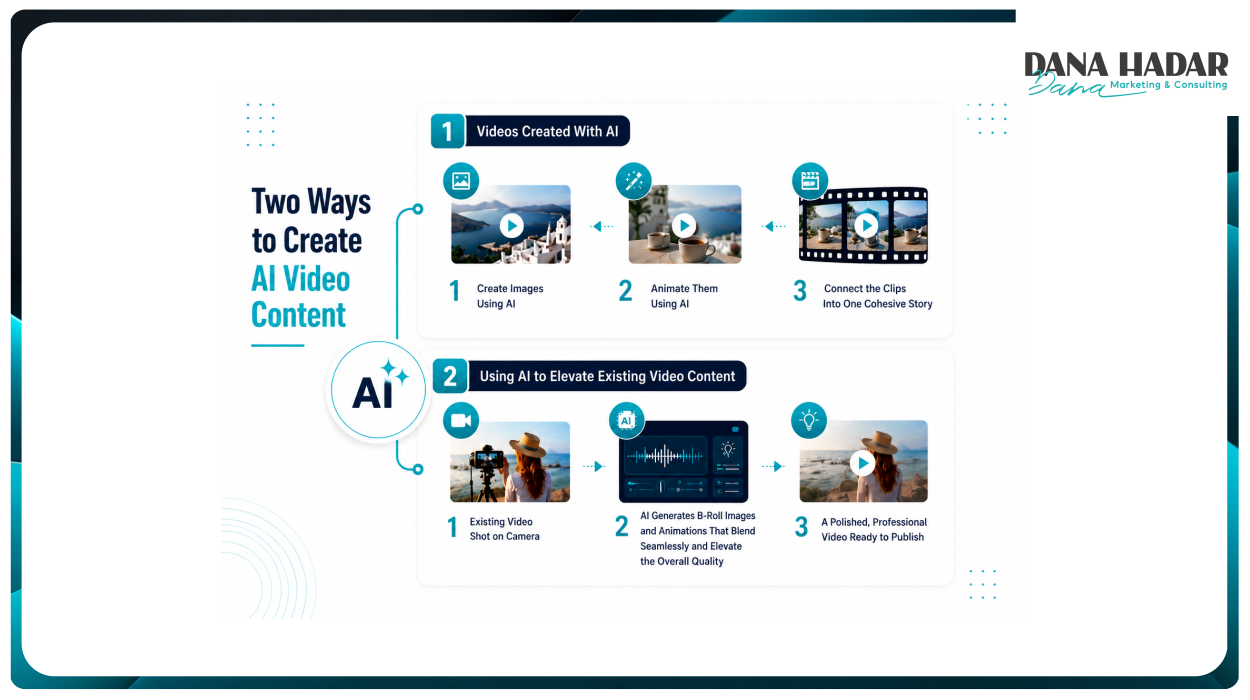
Here we’ll divide the workflow into 2 types of videos:
- Videos created entirely with AI
- Using AI to elevate quality and reduce costs in videos shot with a regular camera
Videos created with AI: This is one of the most fascinating areas in marketing today. That said, it’s important to know that the chances of reaching a truly high level of genuine, relatable video created entirely by AI are still very slim, as it requires phenomenal expertise and knowledge. What AI can do very effectively for campaigns is short animations that easily add interesting variety to the world of static creatives, though they don’t yet constitute truly meaningful content videos.
The workflow for creating AI animations is relatively straightforward:
- Create images with AI
- Animate them using AI
- Connect the clips into one cohesive story using a simple, user-friendly editing feature
You can also simply take a strong static design and give it a light animation in one of the engines (I’ll provide a full breakdown of recommended AI engines and their strengths further ahead). As mentioned, the animation adds interest and variety.
Elevating the quality of videos shot with a regular camera, for example a business owner speaking to camera: It’s well known that video quality is elevated primarily through what’s professionally called “B-roll”, which are images or short video clips that visually illustrate what’s being said and add color, interest, and pacing.
The main problem until now has been that the stock images and animations used by professional video editors look exactly like what they are: stock. Generic, flat, plastic, and feeling completely out of touch with your local market.
This is where anyone who manages to create strong B-roll using AI not only skyrockets their video quality, but also significantly reduces production costs. And here’s a little inside information: the most dreaded step for most editors is hunting down B-roll. If you take that off their plate by producing it yourself professionally, you’ve won from every angle.
AI Tools You Should Know and Use in Your Marketing Stack
For research, thinking, and brainstorming:
For writing:
For image creation:
For video creation:
For music creation:
The tools will change.
The principles will remain.
Frequently Asked Questions
Can AI replace a marketing manager?
No. But it can make a good marketing manager significantly better and more effective.
Can anyone use AI?
Yes. But not everyone will get the same results. Just like not everyone who picks up a camera becomes a professional photographer.
Does AI replace customer research?
No. It helps analyze data, but it does not replace real human conversations with clients or the entire information-gathering process.
Summary
If there’s one idea I want you to take away from this article, it’s this:
AI is not magic, and it does not replace the understanding of human beings. But in the right hands, it’s an extraordinary force multiplier. It allows you to think better, create faster, test more ideas, and reach a level of execution that used to be accessible only to companies with massive budgets.
Advertisers who try to use AI instead of strategy will get generic content. Advertisers who use it to execute a deep, well-thought-out strategy will gain an enormous competitive advantage in Facebook advertising and beyond.
In the end, as always, the difference is not in the tool. It’s in who’s running the machine.